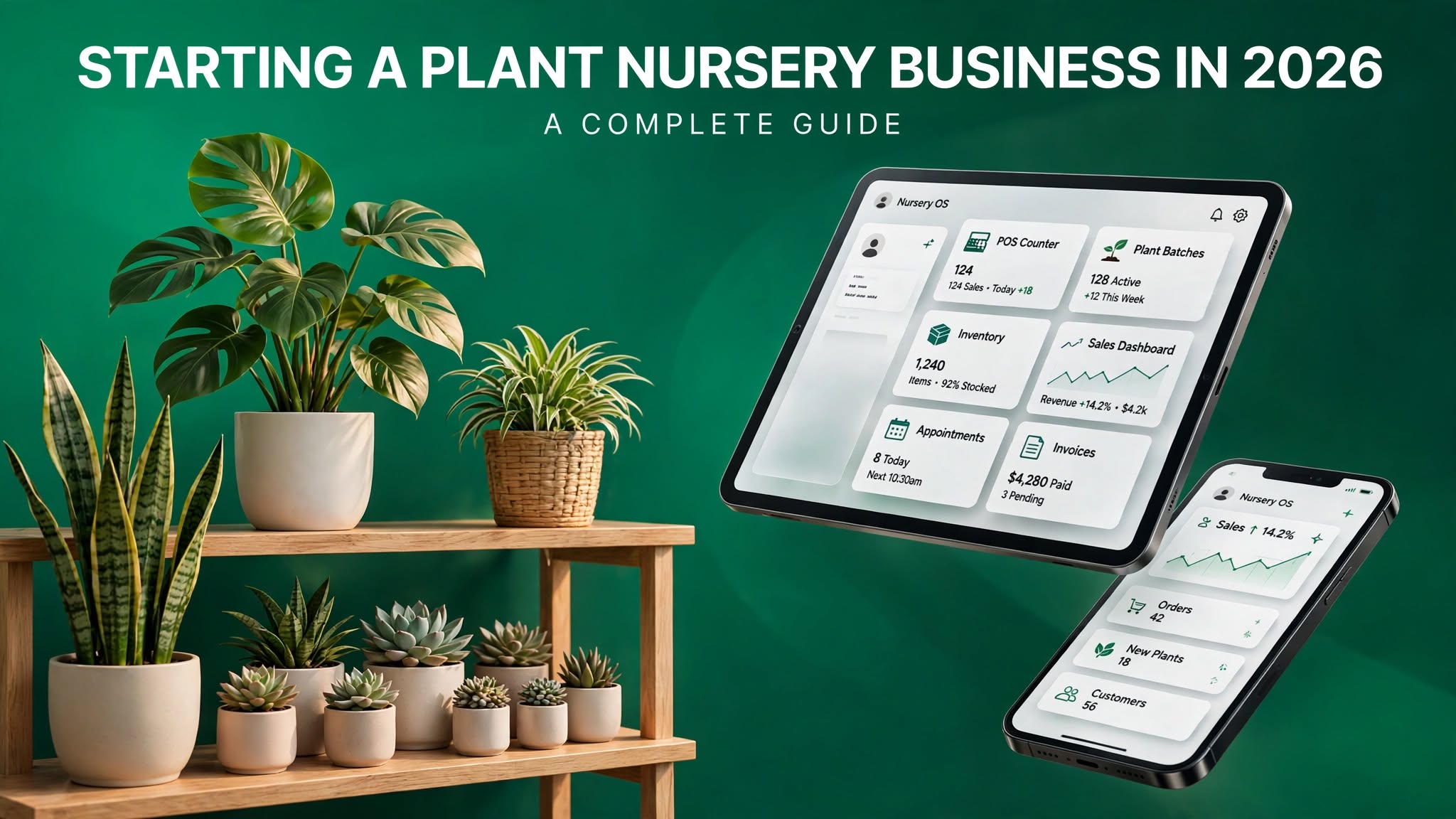
Starting a Plant Nursery Business in 2026: A Complete Guide
Learn how to launch a profitable plant nursery in 2026. Explore profitable niches, setup costs, propagation models, and modern multi-channel sales strategies.


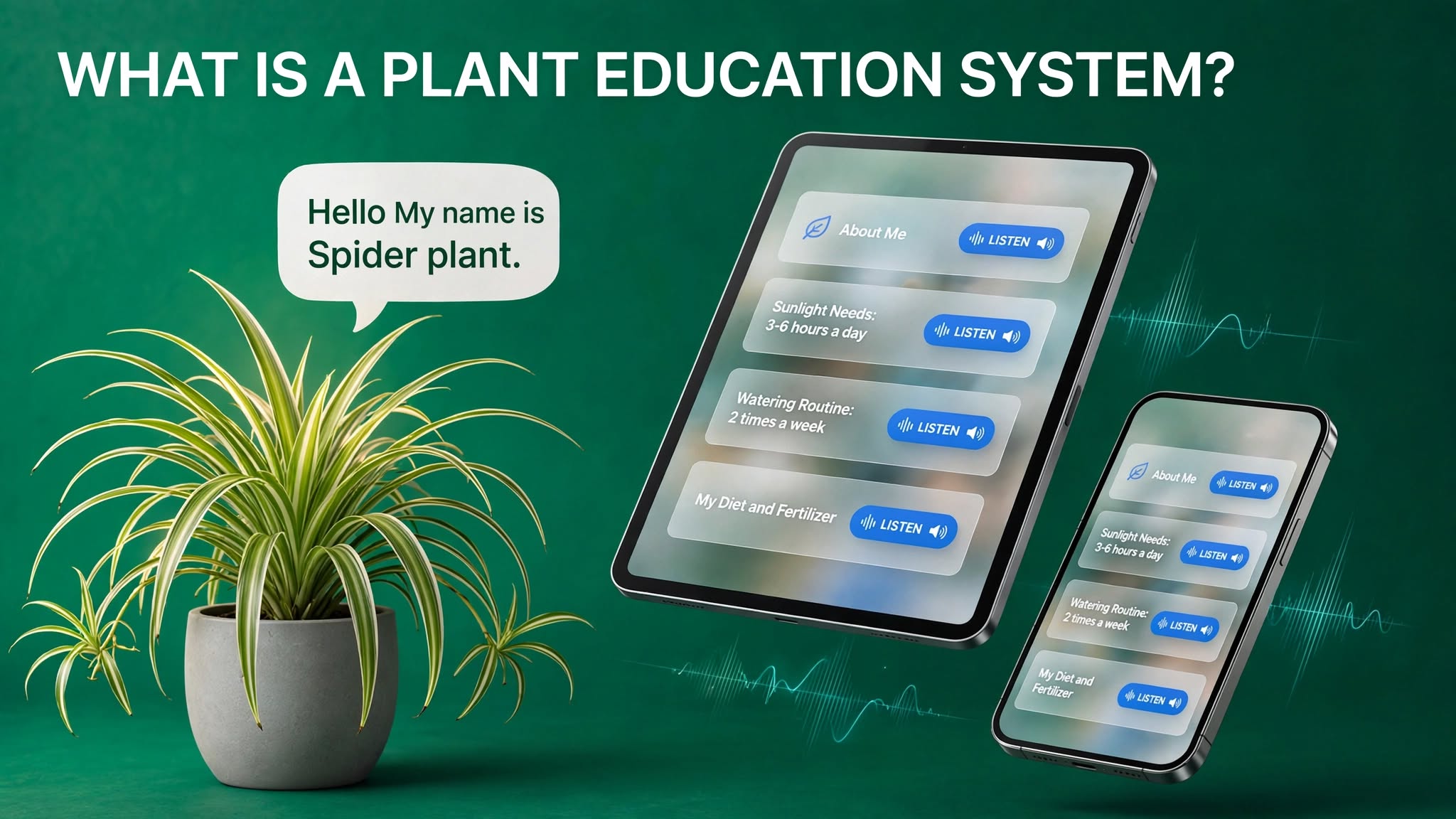
When a customer buys a plant, they usually get one quick verbal tip at the counter. A few weeks later, the leaves turn yellow and they have no idea what to do. A plant education system fixes that.
It is a structured way of giving reliable, plant-specific care knowledge that follows the plant home with the customer. For a nursery, it means fewer dead plants, happier customers, and more repeat visits.
At its simplest, it has 3 parts:
1. A library of accurate content: Light, water, soil, common problems, and seasonal changes for each variety you sell.
2. A way to deliver it at the right time: Right when the customer buys the plant.
3. A way to help after the sale: When questions come up weeks later.
This is very different from a generic Google search. A system tied to your own stock reflects the exact variety and growing conditions your plant came from.
1. A Central Content Library
Build care guides once for each variety and reuse them for every sale. It's much faster than explaining the same thing to every customer.
2. Delivery at the Point of Sale
Care info is most useful at checkout. The best ways to deliver it:
3. Multiple Formats for Different Customers
Not everyone wants to read. Offer:
4. Ongoing Support After the Sale
Problems appear after 2-3 weeks, not day one. You need a way for customers to ask questions instantly - like a chatbot or WhatsApp - instead of making them travel back to the nursery.
PlantIQ's storefront implements this exact model — individual plant education pages tied to specific varieties, supported by a centrally maintained Plant Education Master Library, with Google Cloud text-to-speech so the same content can be listened to as well as read, and an AI-assisted chatbot for follow-up questions after the sale.
You can see a live example of one of these plant education pages here:
Live plant education page example
A short walkthrough of PlantIQ more broadly, including how this fits into the rest of the platform, is available here:
You can also explore the platform directly at:
A plant education system is not an extra feature. It is what turns a one-time sale into a relationship built on trust. Nurseries that start even with just 10 plants see fewer dead plants, fewer frustrated beginners quitting gardening, and more customers coming back because their last plant actually survived.
Author
AI-Powered Business Platform to Scale. Qlinkon delivers AI-powered software & Service solutions to simplify, automate, and grow your businesses.
If you found this article helpful, feel free to share it or
.
Learn how to launch a profitable plant nursery in 2026. Explore profitable niches, setup costs, propagation models, and modern multi-channel sales strategies.
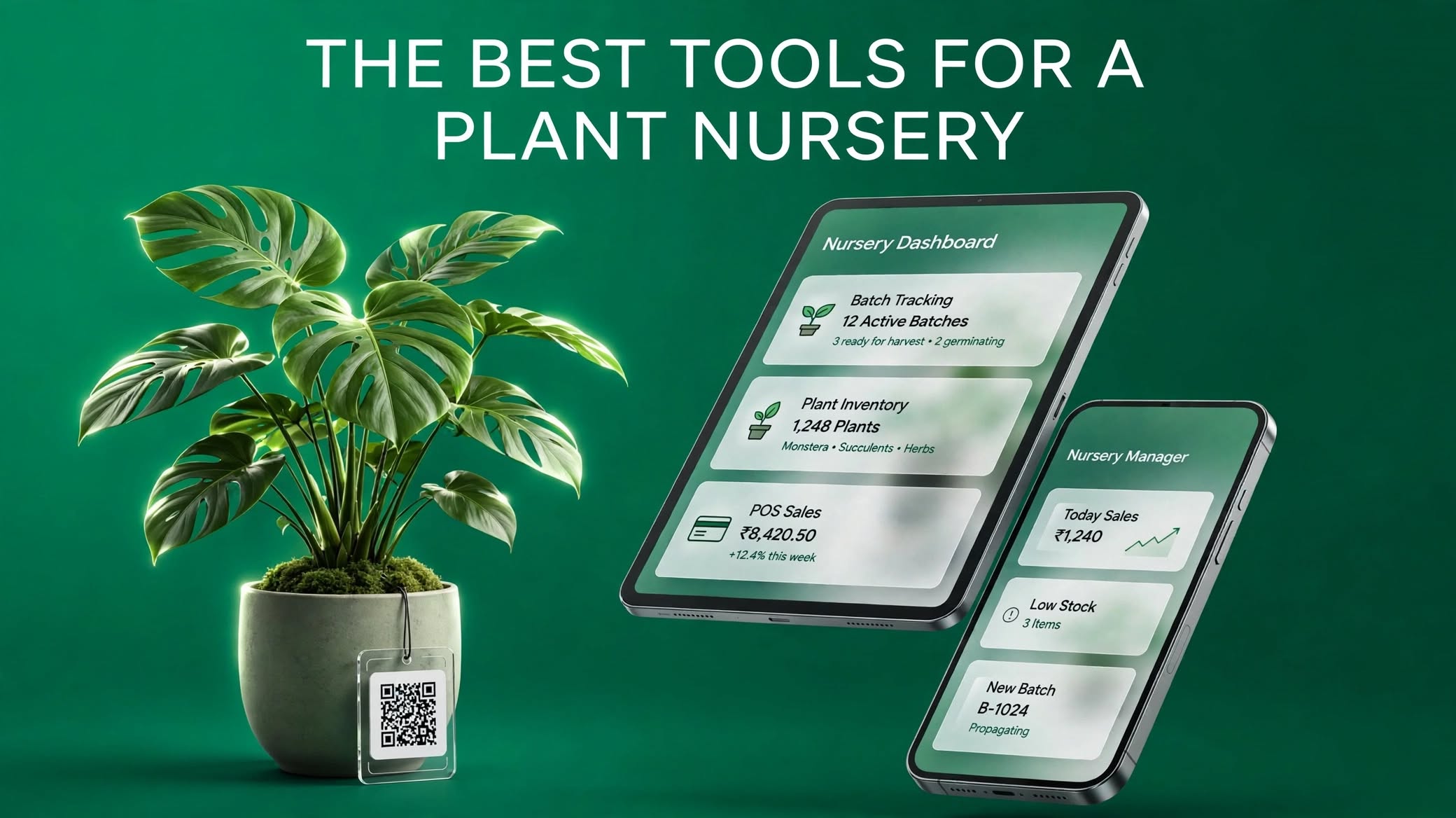
Discover why stitching multiple apps slows down your nursery operations and how an integrated software platform streamlines POS, batch production, HR, and sales.

Before scaling your Indian MSME in 2026, get these 9 essentials right. A practical checklist covering operations, customers, data, and digital readiness.
Pick a date & time, then share your details.